Bea Benaderet Voices
🎙️ Bea Benaderet: The Unsung Matriarch of Animated Voices
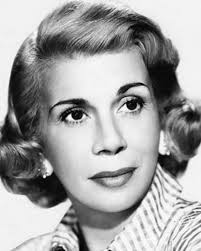
Before the age of celebrity voice casting and social media shoutouts, there was Bea Benaderet—a woman whose voice shaped the soundscape of American animation and radio for over three decades. Born in 1906 in New York City and raised in San Francisco, Benaderet’s career spanned radio, television, and animation, leaving behind a legacy that’s often overlooked but deeply embedded in the DNA of classic cartoon storytelling.
Her mastery of dialects, comedic timing, and character nuance made her one of the most versatile voice actors of her time. From Warner Bros. shorts to Hanna-Barbera sitcoms, Benaderet’s vocal fingerprints are everywhere—and her contributions deserve a spotlight as bright as any marquee.
📻 From Radio Waves to Cartoon Soundstages
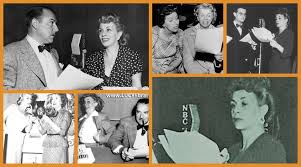
Benaderet’s journey began in the golden age of radio. By age 12, she was already performing on San Francisco’s KGO station, and by the 1930s, she was a fixture on programs like The Jack Benny Program, Fibber McGee and Molly, and My Favorite Husband2. Her ability to switch between accents—Yiddish, French, Spanish, New York English—made her a go-to talent for character-driven comedy.
She wasn’t just reading lines; she was building personas. Her recurring role as Gertrude Gearshift, the wisecracking telephone operator on Jack Benny, showcased her sharp wit and impeccable timing. These radio performances laid the groundwork for her transition into animation, where her voice would become iconic.
🦴 Betty Rubble and Beyond: Hanna-Barbera’s Vocal Backbone
Benaderet’s most famous animated role was Betty Rubble in The Flintstones (1960–1964), where she voiced the sweet yet sassy wife of Barney Rubble. Her chemistry with Mel Blanc (Barney’s voice) was electric, and together they helped The Flintstones become the first prime-time animated sitcom—a format that would later inspire shows like The Simpsons and Family Guy.
But Betty was just the beginning. Benaderet voiced characters across Hanna-Barbera’s expanding universe:
- Emily Scopes and Celeste Skyler in The Jetsons (1962)
- Princess in Touché Turtle and Dum Dum (1962)
- Multiple roles in Top Cat, including Flower Lady and Painting Customer
- Belle in The Yogi Bear Show (1961)
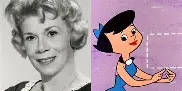
Benaderet voiced Betty Rubble in The Flintstones, bringing warmth and wit to the role.
Her voice was warm, maternal, and unmistakably human—a grounding force in the zany world of animated antics. She didn’t just play characters; she gave them emotional depth, often with just a few lines.
🧙♀️ Warner Bros. and the Women Behind the Curtain
Before Hanna-Barbera, Benaderet was already making waves at Warner Bros., where she voiced a wide range of female characters in Looney Tunes and Merrie Melodies. At a time when Mel Blanc was voicing nearly every character—male and female—Benaderet was one of the few women trusted to bring authenticity to female roles4.
Her credits include:
- Granny (Tweety’s owner) in early shorts
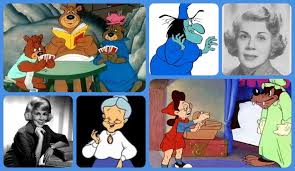
- Witch Hazel, a cackling, chaotic force of nature
- Mama Bear in The Three Bears series
- Various roles in Bugs Bunny, Daffy Duck, Sylvester, and Pepe Le Pew shorts
Though she was rarely credited due to studio contracts, her voice was a constant presence. She brought elegance, eccentricity, and emotional realism to characters that could have easily been one-note.
📺 Television Stardom and Missed Opportunities
Benaderet’s talents weren’t confined to the sound booth. She was a prolific television actress, starring in:
- The George Burns and Gracie Allen Show (1950–1958) as Blanche Morton
- The Beverly Hillbillies (1962–1967) as Cousin Pearl Bodine
- Petticoat Junction (1963–1968) as Kate Bradley, her most beloved live-action role3
Interestingly, she was Lucille Ball’s first choice to play Ethel Mertz in I Love Lucy, but had to decline due to scheduling conflicts. That missed opportunity speaks volumes about her reputation in the industry—she was trusted, respected, and in demand.
Her television work showcased the same qualities that made her a great voice actor: warmth, wit, and a deep understanding of character dynamics. She wasn’t just performing—she was anchoring ensemble casts with emotional intelligence and comedic precision.
🌟 Legacy, Influence, and the Voice That Endures
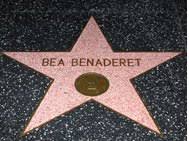
Bea Benaderet passed away in 1968 from lung cancer, but her legacy lives on in every rerun, every nostalgic cartoon block, and every voice actor who studies the craft. She has a star on the Hollywood Walk of Fame for her contributions to television, but her impact on animation is equally deserving of recognition.
Her work paved the way for female voice actors in an industry dominated by men. She proved that women could be funny, versatile, and essential to animated storytelling. Her performances were never caricatures—they were characters, fully realized and emotionally resonant.
For educators, historians, and voice actors like you, Oscar, Benaderet’s career is a masterclass in vocal authenticity. She blended technical skill with emotional truth, creating voices that felt lived-in and real. Her ability to shift between mediums—radio, animation, television—makes her a model of adaptability and creative longevity.
🧭 Why Bea Benaderet Still Matters
In today’s landscape of voice acting, where branding and celebrity often overshadow craft, Bea Benaderet’s career offers a refreshing reminder: the voice is the soul of the character. Her work was never about flash—it was about connection. Whether voicing a prehistoric housewife or a mischievous witch, she brought humanity to the animated frame.
Her legacy is especially relevant for platforms like VoiceoverForAnimation.com, where the goal is to educate and inspire. Benaderet’s story is one of perseverance, versatility, and quiet brilliance. She didn’t chase fame—she built it, one voice at a time.
If you’d like, I can help you format this into a long-form spotlight article with SEO-friendly headers, meta descriptions, and internal links to related content (like Mel Blanc’s legacy or the evolution of female voice actors in animation). Want to build a companion piece on The Flintstones voice cast or a breakdown of Warner Bros.’ early voice acting ecosystem next? Let’s keep the legacy alive.